Most founders have heard the term "AI automation" so many times that it has started to lose meaning. Chatbots, workflow tools, and AI-powered dashboards all get lumped into the same category, even though they solve very different problems. This creates confusion at exactly the moment founders need clarity: when deciding where AI can actually reduce their workload.
This article breaks down one specific concept that matters more than any buzzword: the difference between an automation workflow and an AI Employee, and why that distinction changes what you should expect from any AI system you invest in.
The Problem With "Automation" as a Catch-All Term
Traditional automation follows a fixed path. If this happens, then do that. It is reliable, but rigid. The moment a task requires judgment, an automation workflow breaks or produces the wrong result, because it was never designed to reason. It was designed to execute a predetermined sequence.
This is not a flaw. Rule-based automation is excellent for repetitive, predictable processes like moving data between two systems or sending a templated notification. The issue is that many business problems are not that simple. They involve exceptions, incomplete information, and decisions that depend on context.
What Actually Defines an AI Employee
An AI Employee is not a chatbot with a friendlier name, and it is not a single automation with extra steps attached. It is a system built around three components working together.
1. Reasoning, Not Just Execution
An AI Employee uses a language model to interpret a task, evaluate available information, and decide the next action. This is closer to how a capable team member approaches a task than how a script executes a fixed sequence.
2. Tool Access
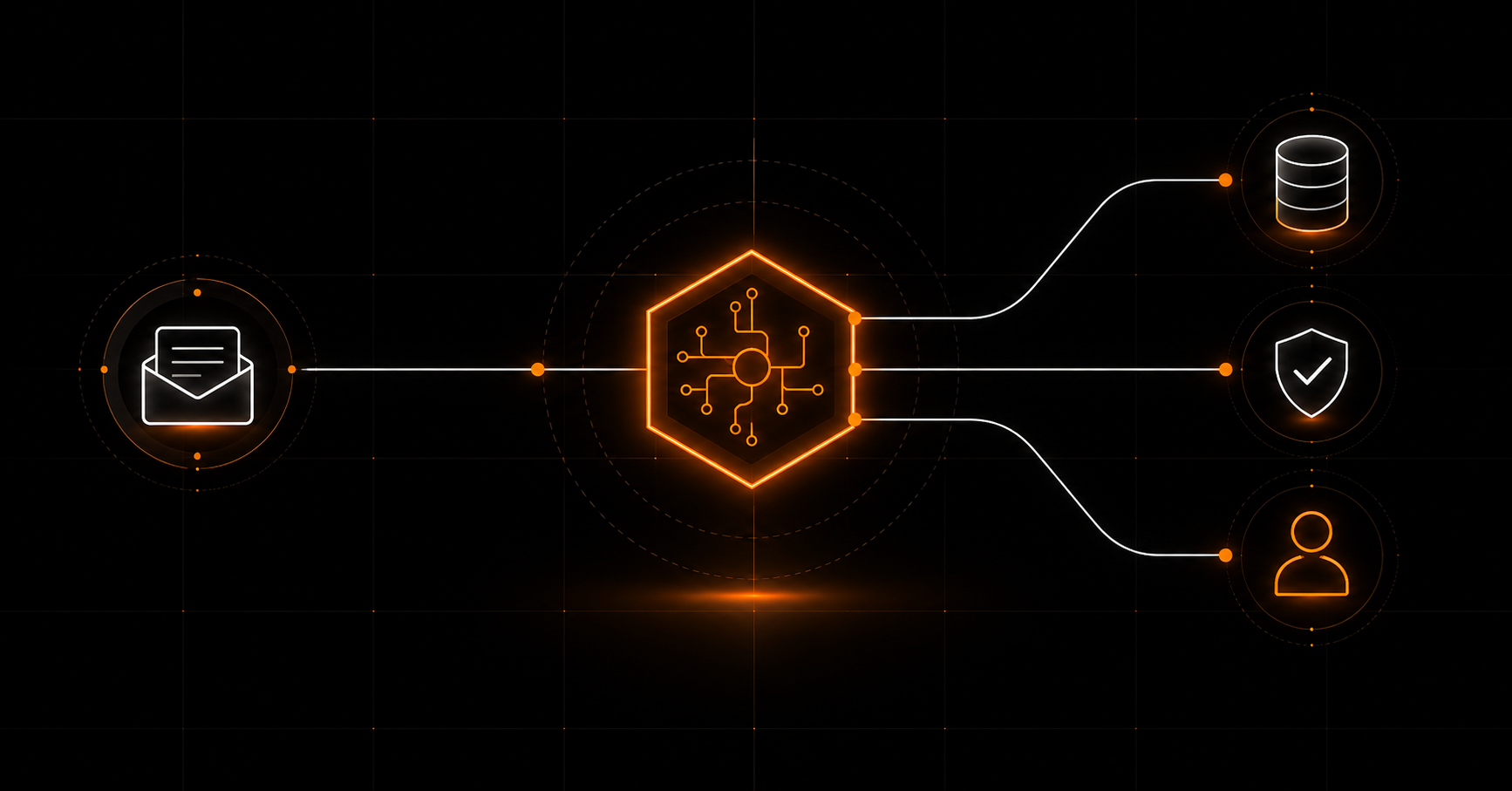
Reasoning alone is not useful without the ability to act. An AI Employee is connected to real tools: a CRM, an inbox, a database, an internal API, or a scheduling system. It does not just suggest what to do. It carries out the action inside the systems the business already uses.
3. Human in the Loop Where It Matters
This is the part most AI marketing conveniently skips. A properly built AI Employee is not left to make every decision unsupervised. For actions with real consequences, such as sending a client-facing message, approving a refund, or closing a deal stage, the system is designed to pause and route the decision to a human for approval. Automation handles the repetitive layer. The person stays in control of the judgment layer.
This is the meaningful difference between a workflow and an AI Employee: a workflow executes steps, while an AI Employee reasons, acts, and knows when to ask.
A Simple Way to Tell Them Apart
Ask one question about any process in your business: does this task ever require judgment, or does it always follow the same steps with no exceptions?
If it always follows the same steps, a standard automation is the right tool. It is cheaper, faster to build, and there is no reason to overcomplicate it with AI reasoning it does not need.
If the task involves exceptions, incomplete context, or decisions that shift based on the situation, that is where an AI Employee becomes valuable. It can read a message, understand intent, check relevant information, and either act directly or flag the decision for a human, depending on how it was designed.
Where This Applies in a Real Business
Consider a recruitment agency handling inbound candidate applications. A basic automation can move a resume from an inbox into a spreadsheet. That is useful, but limited.
An AI Employee can go further. It can read the resume, compare it against the requirements of an open role, draft a summary for the recruiter, and only escalate the strongest matches for human review, rather than adding every application to a growing, unsorted list. The recruiter still makes the final call. The AI Employee removes the manual sorting that consumed time without requiring judgment.
The same pattern applies across accounting firms triaging client requests, healthcare clinics managing appointment coordination, and B2B service businesses qualifying inbound leads before a sales conversation happens.
Why This Distinction Matters Before You Buy Anything
Founders often approach automation backward. They see a tool, get excited about a feature, and try to force their business process to fit it. The better approach starts with the process itself.
List the repetitive tasks currently handled manually. For each one, decide honestly whether it needs judgment or not. That single exercise will tell you more about where to start than any product comparison. Some of those tasks need a simple workflow. Others need an AI Employee capable of reasoning through exceptions. Knowing the difference before you build anything saves both time and budget.
Closing Thought
AI Employees are not a replacement for a team. They are a way to remove the repetitive, judgment-light work that quietly consumes hours every week, while keeping a human in control of the decisions that actually matter. The goal is not to automate everything. It is to automate the right things, in the right way, with the right amount of oversight.